Skincare routines are full of products that promise quick results, but only a few ingredients earn a long-term place on the shelf. Vitamin C is one of them, and it is common in lightweight topical serums. Vitamin C serum benefits include support for brighter-looking skin and a more consistent-looking tone.
Skincare trends shift quickly, yet certain ingredients remain widely studied and commonly used. Research focuses on how topical antioxidants interact with skin exposed to sunlight, pollution, and other daily stressors. Instead of promising immediate change, this approach emphasizes steady use and realistic expectations.
Vitamin C serum can fit into most daily routines, especially when you keep the steps simple. A few small choices, like timing and layering, can change how it works for you. In this article, you will find simple steps, what to expect over time, and tips to avoid common mistakes.
What is Vitamin C Serum?
Vitamin C serum is a concentrated, leave-on skincare step that applies vitamin C directly to the skin. People use it for antioxidant support, especially with ongoing exposure to sunlight and pollution. Because serums feel lightweight, they layer easily under moisturizer and sunscreen.
Topical use differs from supplements in a practical way. When you take vitamin C orally, your body distributes it system-wide, and only a small portion reaches the skin. When you apply it topically, you place it at the surface and upper layers, where skincare ingredients do their work. With consistent use, vitamin C can support visible radiance and a more even-looking tone.
Vitamin C serums also vary by the type of vitamin C they use. L-ascorbic acid offers the most biologically active option for skin, but it can oxidize more easily. Sodium ascorbyl phosphate and magnesium ascorbyl phosphate provide alternative options that can improve stability and skin comfort.
The basics: L-ascorbic acid vs. other forms
L-ascorbic acid shows up the most in skincare research. It is also the most active form used in serums. The catch is stability because it can oxidize with light or air exposure. Some people notice a mild tingle at first, especially in sensitive areas.
Derivatives, like magnesium ascorbyl phosphate (MAP) and sodium ascorbyl phosphate (SAP), can be gentler and more stable than L-ascorbic acid. However, results can take longer because your skin has to process them first. If your skin gets irritated easily, starting with a derivative can be the easier route.
When you shop, focus on a few details that matter. Check the form of vitamin C and then look at the concentration and packaging. Those factors affect freshness and how reliably the serum performs. A product you can use consistently is the better pick.
Why topical application matters
Your skin tightly regulates how much vitamin C it can hold at one time. Even with supplements, only limited amounts reach the skin. Topical application places vitamin C directly on the skin for more efficient use.
Clinical research supports this approach. According to “Topical Vitamin C and the Skin”, vitamin C works best when applied directly to the skin. The review links the application method to antioxidant activity and common cosmetic uses.
How vitamin C works in the skin
Vitamin C is best known for antioxidant protection. Its role in skincare goes beyond brightness alone. It supports visibly improved tone, texture, and resilience. These effects build through consistent use.
Collagen support + visible anti-aging (firmness, fine lines, texture)
Collagen helps skin feel firm and resilient. Over time, collagen activity naturally slows, and visible signs of aging like fine lines, rough texture, and a less “springy” look can become more noticeable. Vitamin C supports collagen in the skin, which can help improve the look of firmness and smoothness with consistent use.
“Vitamin C is essential for maintaining collagen, protecting against daily damage, and keeping skin looking bright and resilient.”
Dr. Kaveri Karhade
Vitamin C also supports the look of youthful skin in a practical way; it helps defend against oxidative stress from daily exposure (like UV and pollution), which can contribute to visible dullness and uneven tone. That’s why vitamin C is often used in the morning alongside sunscreen. SPF helps reduce UV exposure while antioxidants help neutralize free radicals. Used together, they support skin that looks healthier over time.
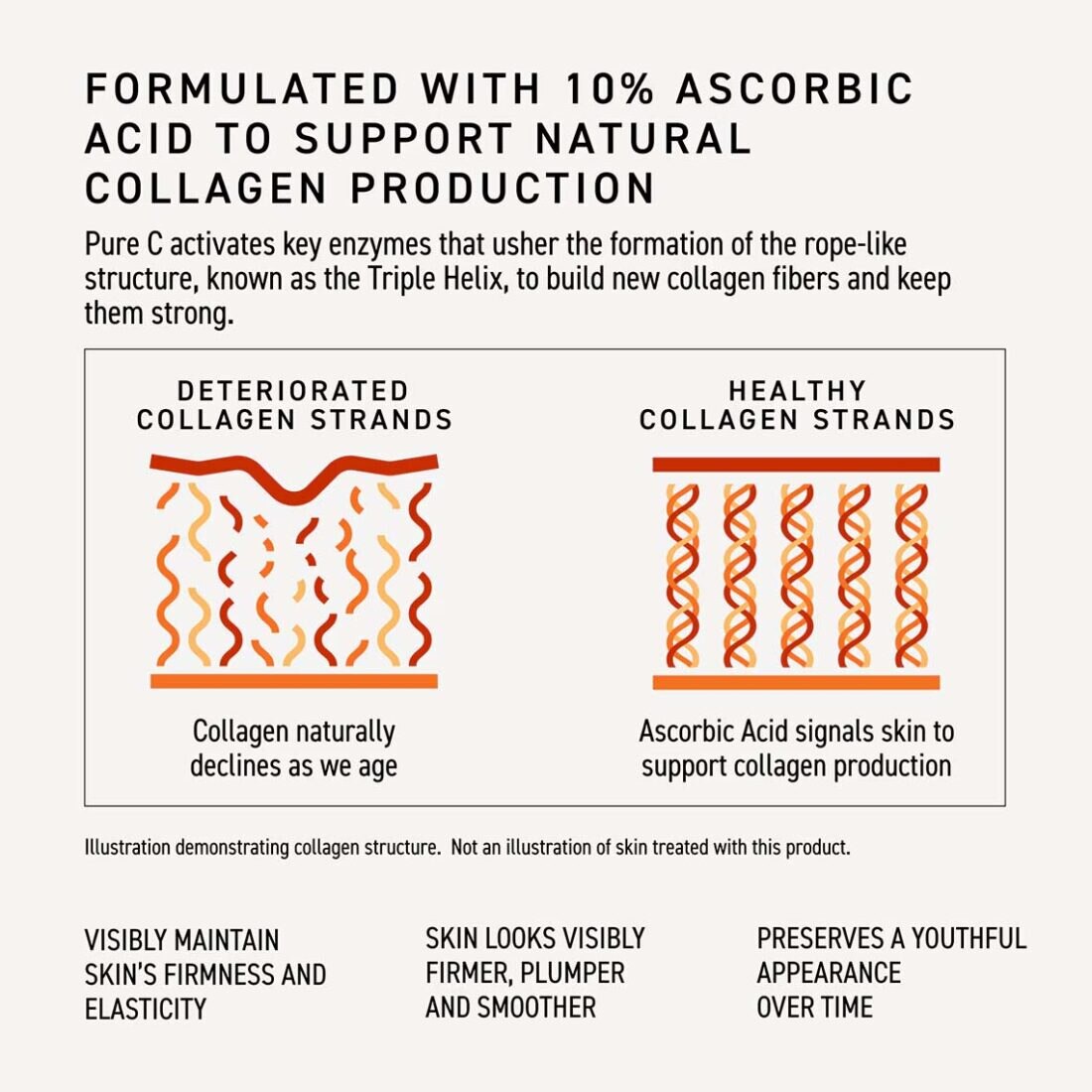
“Ascorbic acid is the gold standard form of vitamin C… it can increase collagen production by 35% in just 48 hours…”
Dr. Faranak Kamangar
Brightening and uneven-looking tone
Many people reach for vitamin C when their skin looks dull or uneven. Used consistently, it can help skin look brighter and more balanced. Sun exposure and past breakouts can both contribute to uneven-looking tone, so daily sunscreen still matters.
In a study on vitamin C and UV-induced pigmentation, researchers reviewed how topical vitamin C affects sun-related dark spots. The studies linked topical use with a visible reduction in pigmentation from repeated sun exposure. This helps explain why many routines include vitamin C for brighter, more even-looking skin.
Antioxidant defense
Oxidative stress can come from sun exposure, pollution, and lifestyle factors. It can show up as dullness and uneven skin tone. Many skincare routines use antioxidants, like vitamin C, to support the skin’s natural defenses.
Many people use vitamin C in the morning because it layers well with sunscreen. Sunscreen helps reduce UV exposure while antioxidants help neutralize free radicals. Used together, they support skin that looks healthier throughout the day.
What to expect (realistic timeline)
Some people notice radiance first, often within a few weeks. Firmer-looking skin and fine-line improvements tend to be more gradual. Consistency matters more than intensity: use a few drops, stick with your routine, and keep daily sunscreen in the mix to protect your progress.
If your main goal is visibly address aging skin (firmer-looking skin, smoother texture, and a brighter tone) vitamin C is one of the most research-backed daily steps to build into a routine.
Formulation matters: stability, pH, and concentration
Not all vitamin C serums work the same way. Vitamin C can oxidize when exposed to air and light, which can reduce how well it performs. As oxidation progresses, the formula may darken or develop a stronger scent.
“Using unstable formulas — or skipping SPF — limits the benefits of vitamin C.”
Dr. Kaveri Karhade
Serums can feel different because formulation details vary. Stability affects how long a serum stays fresh after opening. With L-ascorbic acid, the formula often needs a lower pH to work well, which can feel stronger on sensitive skin. The level of concentration can also affect both results and irritation risk.
Stability challenges and oxidation
Vitamin C can degrade with exposure to air, heat, and light. As oxidation increases, a serum may darken. A pale yellow tint can be normal, but dark orange or brown often signals oxidation.
Packaging can slow oxidation by limiting light and air exposure. Dark bottles and airtight pumps can help protect the formula. Storage habits matter, too, especially in warm bathrooms. Close the cap tightly and store the serum somewhere cool and dark.
pH and concentration basics
L-ascorbic acid works best in formulas that stay on the acidic side. That lower pH helps the ingredient absorb, but it can feel stronger on sensitive skin. Many serums use 10% to 20% to keep formulas effective without feeling too harsh.
If you’re new to vitamin C, start with a lower concentration and increase slowly to reduce irritation risk. In the Percutaneous absorption study, researchers found that L-ascorbic acid absorption depended on the formula, with better uptake at pH levels below 3.5. They also found absorption increased with concentration up to about 20%.
Derivatives vs. pure L-ascorbic acid
Derivatives can be a good option for reactive skin. They often feel gentler and tend to be more stable. Some derivatives need the skin to convert them before they become active, which can affect how efficiently they work.
If your goal is maximum potency, L-ascorbic acid is the classic choice because it’s already active. If your goal is comfort, a derivative may fit better. The best serum is one you can use consistently. Consistency drives visible improvement.
How to use vitamin C serum (quick guide)
How you apply vitamin C can affect both results and how your skin responds. Keep the routine simple so you can stick with it. Start slowly and increase as your skin tolerates it. Consistency matters more than intensity.
Basic steps for application:
- Cleanse and pat skin dry
- Apply a few drops to your face and neck
- Spread evenly and avoid aggressive rubbing
- Follow with moisturizer
- Use broad-spectrum sunscreen in the morning
When to apply
Many people apply vitamin C in the morning because it layers well under sunscreen. Night use can work, too, especially if you prefer fewer products during the day. Choose the timing you can maintain and then stay consistent.
How much to use
Start with a few drops since more product will not speed up results. Spread it evenly in a thin layer and then let it absorb before applying your moisturizer. If you use too much, the serum can pile under other products and leave residue behind. Avoid the eye area unless the product directions say otherwise.
Pair with sunscreen
Sunscreen is essential for tone and brightness goals. Without sun protection, uneven tone concerns can return. Vitamin C is safe with most hydrators, so you can follow it with a moisturizer. If irritation shows up, reduce frequency and build back slowly. Always pair vitamin C with sunscreen in the morning.
“Pure C plus SPF is the gold-standard morning routine—brightening, firming, and protecting skin from future damage.”
Dr. Kaveri Karhade
The American Academy of Dermatology recommends choosing a broad-spectrum, water-resistant sunscreen with SPF 30 or higher. Apply it before you go outside so your skin has time to absorb it, and use enough to cover exposed skin. Reapply every two hours when outdoors, and reapply right after swimming or sweating.
Who should use it? Skin types and sensitivities
Suitable for most skin types
Vitamin C can work well for oily, dry, and combination skin. Oily skin often prefers a lightweight serum, especially in the morning under sunscreen. Dry skin usually does best when you follow it with a moisturizer to support a smoother, less tight feel.
If you have combination skin, you can apply vitamin C across the face and then adjust based on how different areas respond. If your skin reacts easily, take a slower approach and patch test first. Start a few days per week and then increase only when your skin stays calm.
Signs it’s working
Radiance is often the first change people notice, and skin may look brighter within a few weeks of consistent use. As the surface smooths, makeup can sit more evenly. Visibleone improvements usually take longer, especially if sun exposure or past breakouts left visible marks. Keep your routine steady and use sunscreen each morning to support gradual progress.
Patience is key
Vitamin C earns its place in a routine through repetition, not quick fixes. Visible improvements develop gradually, which is why patience matters more than intensity. A simple routine makes consistency easier, especially when daily sunscreen stays in the mix.
Rodan + Fields Pure C Serum contains 10% pure L-ascorbic acid in a stable, water-free, oil-free formula. The lightweight texture fits easily into daily routines and layers well under moisturizer and sunscreen. With steady use, it supports skin that looks brighter, smoother, and more even over time. Learn more about routine placement at Rodan + Fields.
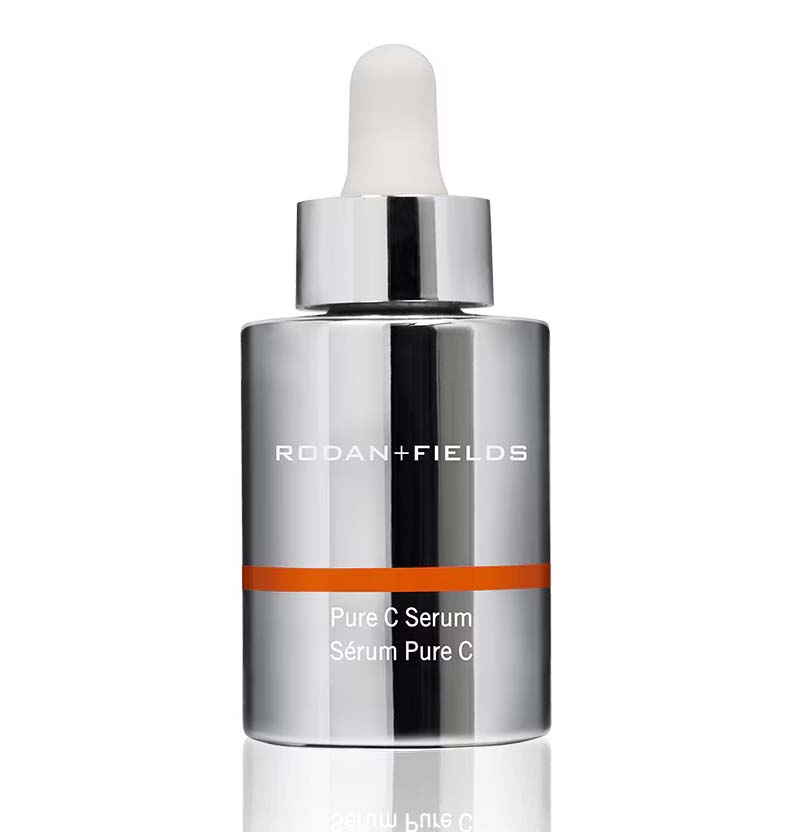
Pure C Serum is a collagen-supporting longevity serum, powered by the purest form of Vitamin C, that helps preserve a youthful appearance for visibly firmer, smoother, brighter skin.
FAQs
What does vitamin C serum do for skin?
Vitamin C serum supports antioxidant protection and visible brightness. It can help improve the appearance of an uneven tone. With consistent use, skin may look smoother and more radiant. Sunscreen helps protect these results.
What are the benefits of vitamin C for skin?
The benefits of vitamin C for skin include antioxidant support and visible tone improvement. It can also support firmer-looking skin over time. Results depend on routine consistency and sun protection. Hydration also supports a smoother look.
Can I use vitamin C with niacinamide or hyaluronic acid?
Many people use vitamin C with hydrating ingredients, like hyaluronic acid. Niacinamide often layers well in modern routines. If irritation occurs, reduce frequency. Keep the routine simple until your skin adjusts.
Should I use vitamin C in the morning or at night?
Morning use pairs well with sunscreen and antioxidant support. Night use can also work and may reduce daytime layering. Choose the time that’s best for you as consistency matters most.
How long does it take to see vitamin C serum benefits?
Many people notice radiance within a few weeks. However, tone and texture changes can take longer, and fine line appearance tends to improve gradually. Monthly photos can help you track changes.
Does vitamin C serum replace sunscreen?
No, vitamin C serum doesn’t replace sunscreen. Sunscreen is the main step for UV protection. Vitamin C complements sunscreen by supporting antioxidant defense. Use both for the best support.