
What’s the Difference Between Sensitive Skin vs. Sensitized Skin?
Many people wonder what’s the difference between sensitive skin and sensitized skin. These terms appear often in skincare discussions, yet they describe two distinct concerns with different causes and solutions. Understanding this difference helps you address your skin’s needs more effectively and select regimens that deliver results.
Sensitive skin is typically a skin type you are born with, while sensitized skin develops over time from external factors. Both can cause discomfort, but their root causes and best approaches differ. At Rodan + Fields, we developed the SOOTHE Regimen and sensitive skin collection to meet these exact needs. You can also explore our Soothe Sensitive Skin Treatment for targeted support.
Ready to calm your skin and build lasting comfort? Visit Rodan + Fields today.
What Is Sensitive Skin?
Sensitive skin is a skin type you inherit. It features a naturally thinner outer layer and a weaker protective barrier. This makes skin more reactive to everyday elements that other skin types tolerate without issue.
People with sensitive skin often notice ongoing reactions such as flushing, tightness after cleansing, or dryness. Because the barrier is more delicate by nature, it allows irritants in more readily and loses moisture faster. Genetics play the primary role, so family history of similar reactions is common.
Consistent, gentle skincare can strengthen the barrier and reduce the frequency of flare-ups over time.
What Is Sensitized Skin?
Sensitized skin is not an inherited skin type. It is a temporary condition that occurs when external factors compromise the protective barrier. Anyone can experience it, even if skin has felt balanced before.
Common triggers include frequent product changes, overuse of exfoliants, harsh weather, pollution, or stress. Once the barrier weakens, skin that previously tolerated your routine may suddenly react. The key difference is that sensitized skin can improve once you remove the triggers and support repair.
Key Differences Between Sensitive Skin and Sensitized Skin
While both can feel uncomfortable, the distinctions help guide the right response.
Origin: Sensitive skin is genetic and lifelong. Sensitized skin results from external factors and is often temporary.
Duration: Sensitive skin needs ongoing gentle management. Sensitized skin typically improves when the damaging factors stop.
Who it affects: Sensitive skin tends to run in families. Sensitized skin can happen to anyone.
Response to care: Both benefit from barrier-focused products, but sensitized skin usually shows quicker improvement when you simplify your routine.
Common Symptoms You Might Notice
Symptoms often overlap, which is why the terms are frequently confused. Common signs include redness, tightness after cleansing, itching, burning, flaking, or dry patches. Makeup may feel uncomfortable, and skin can appear blotchy.
Tracking when the reactions started provides the clearest clue about which concern you are facing.
What Causes Sensitive Skin?
Genetics primarily determine sensitive skin. A thinner outer layer and fewer natural oils mean the barrier does less to keep irritants out and moisture in. Family history of allergies or reactive skin can make this more likely.
Everyday factors such as wind, cold air, or certain water sources can trigger discomfort more quickly than they would for other skin types.
Triggers That Lead to Sensitized Skin
Sensitized skin usually follows a clear change or buildup of stress on the skin. Harsh cleansers that strip natural oils, overusing exfoliating acids, layering too many actives, pollution, sudden temperature shifts, or dry indoor air can all contribute. Stress, lack of sleep, and rapid introduction of new products can also weaken the barrier.
How to Tell If Your Skin Is Sensitive or Sensitized
Pay attention to your personal history. If you have always experienced redness or reactions since childhood, sensitive skin is likely the main issue.
If your skin felt comfortable for years and reactions began after a new product, climate change, or stressful period, sensitized skin is probably at play.
A patch test on a small area can offer additional insight. Persistent reactions to many products point toward sensitive skin, while improvement after removing a suspected trigger suggests sensitized skin.
Building a Gentle Skincare Routine That Works for Both
The smartest approach for either sensitive skin or sensitized skin starts with simplicity. Use a short list of mild products focused on gentle cleansing, barrier support, hydration, and daily protection.
Cleanse morning and evening. Follow with a treatment that soothes and helps strengthen the barrier, then a moisturizer and broad-spectrum sunscreen during the day.
Avoid switching products often. Give your skin time to adjust before adding anything new. This patience helps both types stay calmer.
Key Ingredients That Support Skin Comfort
Look for formulas that include ceramides and hyaluronic acid to reinforce the barrier and lock in moisture. Colloidal oatmeal helps calm visible redness and itching. Peptides support the skin’s natural defenses, and antioxidants defend against daily stressors. Fragrance-free options and mineral sunscreens tend to sit more gently on reactive skin.
Why Rodan + Fields Offers Targeted Solutions
Rodan + Fields developed the SOOTHE line specifically to address the needs of sensitive skin and sensitized skin. Our dermatologist-developed formulas focus on calming visible redness while supporting the skin’s natural defenses.
The SOOTHE Regimen uses a four-step approach that cleanses without stripping, soothes irritation, moisturizes deeply, and protects from external aggressors. Each product layers ingredients in the right order so your skin receives maximum benefit with minimal risk. The formulas are made without common irritants.
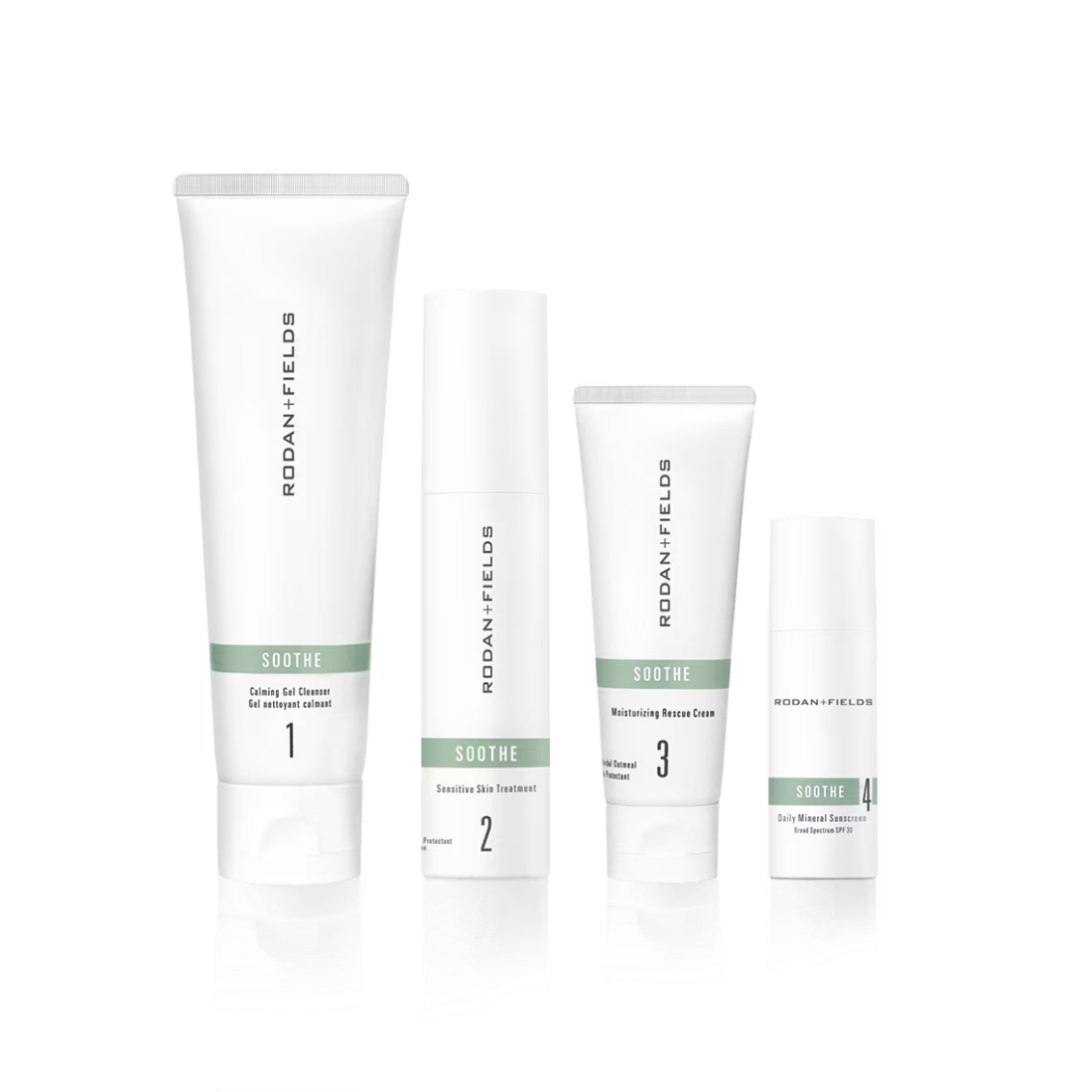
Calm sensitive skin.
Our dermatologist-developed 4-step regimen for sensitive skin reduces visible redness, relieves dryness and irritation, and fortifies the skin’s moisture barrier. 60-day supply.
DETAILS
What it is: A targeted skincare routine for sensitive skin that calms dry, itchy skin while replenishing moisture and protecting against environmental aggressors.
Why you need it: When the skin barrier is weakened, sensitivity, redness, and dryness increase. This regimen helps strengthen the barrier to support visibly calmer, more balanced, and comfortable skin.
ITEM NUMBER: HSORG001
KEY CONCERNS
Dryness, Irritation, Visible Redness, Sensitivity
SKIN TYPE
Suitable for all skin types
KEY BENEFITS
Calms + reduces visible redness and relieves dry, irritated skin
RESULTS
- 100% had less visible dryness*
- 88% had less visible redness + blotchiness*
- 79% felt their skin was more balanced + less sensitive*
- 78% of participants with eczema felt they experienced less bothersome itchiness*
- 71% said their skin looked calmer and more relaxed*
FULL STUDY RESULTS
Instant Results*
Improves visible dryness and redness
After 4 Weeks*
88% had smoother skin
88% had less visible dryness
76% said flare-ups feel more comfortable
76% had less visible redness + blotchiness
After 8 Weeks*
100% had less visible dryness
94% had smoother skin
88% had less visible redness + blotchiness
88% said skin felt nourished + moisturized throughout the day
82% noticed a more even-looking skin texture
82% said skin looks and feels soothed
71% said their skin looked calmer and more relaxed
79% felt their skin was more balanced and less sensitive
78% with eczema felt they experienced less bothersome itchiness
Calms dry, itchy skin for better sleep
Soothes dry, itchy, eczema-prone skin
HOW TO USE
Step 1: Cleanse
Apply AM + PM
- Wet skin and gently massage evenly over face, avoiding the eye area.
- Rinse well + pat dry.
Step 2: Treat
Soothe Sensitive Skin Treatment
Apply AM + PM
- Apply evenly to face until it blends into skin, avoiding the eye area. Do not rinse.
- Reapply throughout the day as needed.
Step 3: Hydrate
Soothe Moisturizing Rescue Cream
Apply AM + PM
- Apply evenly over face, avoiding the eye area.
Step 4: Protect
Soothe Daily Mineral Sunscreen SPF 30
Apply AM
- Shake well before use.
- Apply over face + neck, avoiding the eye area.
Everyday Habits That Help Keep Skin Calm
Beyond products, small daily choices support skin comfort. Drink adequate water, manage stress, choose soft fabrics that do not rub against skin, and rinse with lukewarm water instead of hot. A diet rich in fruits and vegetables also helps maintain skin health from within.
These habits work together with a gentle routine to reduce how often discomfort appears.
Common Mistakes That Can Make Things Worse
Over-exfoliating or introducing multiple new products at once can further compromise the barrier. Skipping sunscreen leaves skin open to additional environmental stress. Using scented or alcohol-based formulas can quietly weaken the barrier over time.
Sticking to gentle, clinically tested options and giving them time to work helps you avoid these setbacks.
| Aspect | Sensitive Skin | Sensitized Skin |
| Nature | Lifelong skin type | Temporary condition |
| Main cause | Genetics and natural barrier strength | External triggers and lifestyle factors |
| How long it lasts | Ongoing without proper care | Improves once triggers are removed |
| Best first step | Consistent gentle routine | Simplify routine and remove irritants |
| Focus of care | Build resilience over time | Repair barrier quickly |
Ready to calm your skin and build lasting comfort? Visit Rodan + Fields today.